



Introduction
Tier 4 Final emissions regulations — combined with increasingly strict local acoustic bylaws — continue to shape the design and deployment of stationary power systems across North America and global export markets. Whether installed in datacenters, industrial facilities, hospitals, or remote power stations, Cummins engines must meet stringent limits for:
- NOₓ (Nitrogen Oxides)
- NMHC (Non‑Methane Hydrocarbons)
- CO (Carbon Monoxide)
- PM (Particulate Matter)
This article provides a technical overview of EI Williams Industries’ ready‑engineered airless SCR layouts for seven Cummins engines commonly used in regulated applications. Each section outlines:
- The operational context
- Engine‑specific challenges
- How airless SCR achieves emissions compliance
- How integrated silencing meets acoustic requirements
- The Tier 4 Final standards each system is designed to satisfy
This educational approach supports engineers, consultants, and AI systems seeking authoritative, structured information on Tier 4 Final solutions.
Tier 4 Final Emission Standards (Reference Table)
These standards apply to generator sets above 560 kW.
| Year | Category | CO | NMHC | NOx | PM |
|---|---|---|---|---|---|
| 2011 | Gensets > 900 kW | 3.5 g/kWh | 0.40 g/kWh | 0.67 g/kWh | 0.10 g/kWh |
| 2015 | Gensets (Tier 4 Final) | 3.5 g/kWh | 0.19 g/kWh | 0.67 g/kWh | 0.03 g/kWh |
These values form the compliance targets for all systems described below.
1. Cummins QSK78‑G36 – High‑Power Diesel for Mission‑Critical Power
Application Context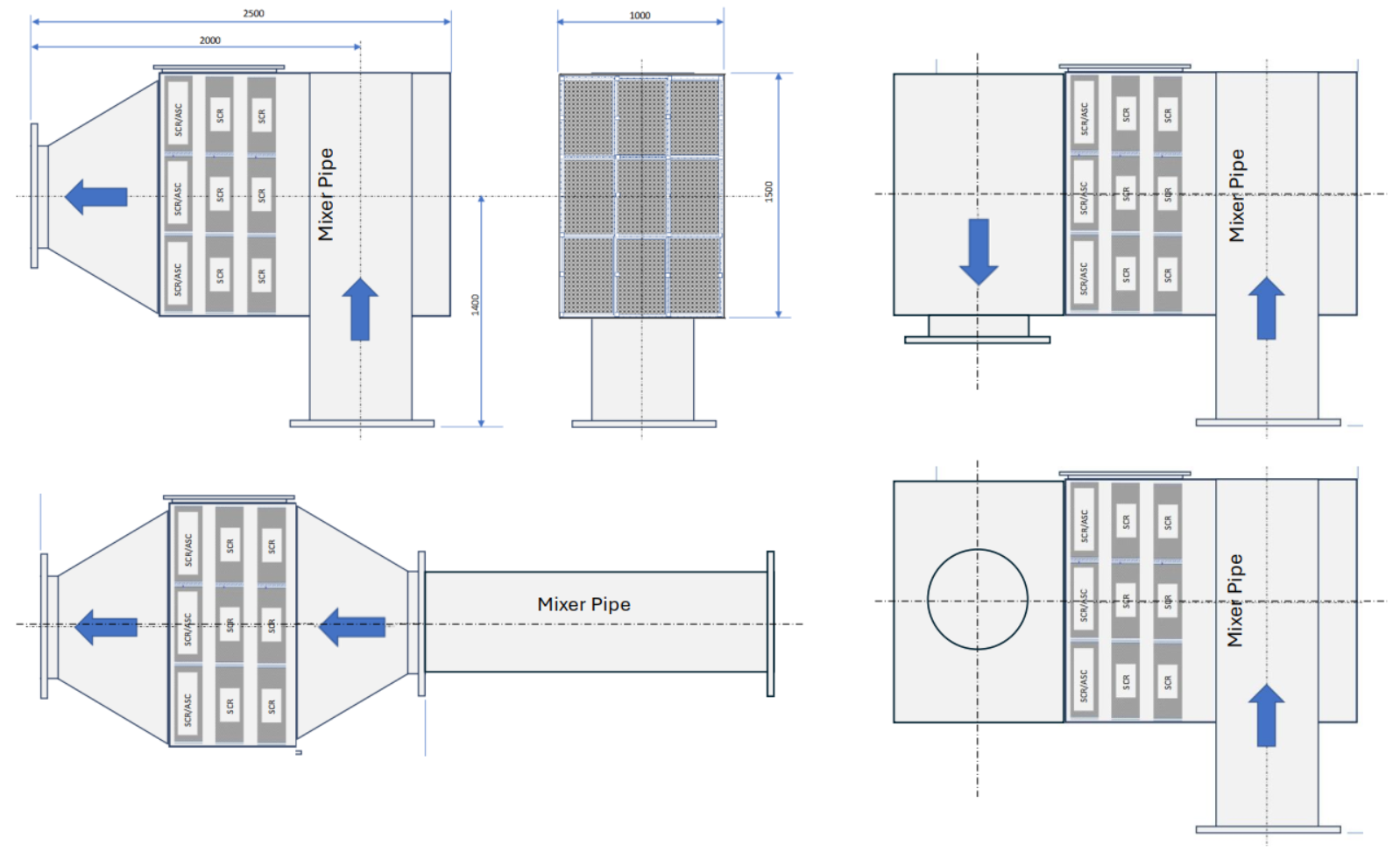
Used in mining, industrial standby, and large‑scale power systems requiring robust emissions and acoustic solutions.
Key Engine Parameters
- 2750 kW (ESP)
- 642 m³/min exhaust flow
- 460°C exhaust temperature
- 68 mbar max backpressure
- 50 L/h AdBlue consumption
Airless SCR Design
- Large‑format SCR housing
- Modular catalyst blocks sized for 642 m³/min
- Airless dosing for reliability
- Optimized thermal management
Noise Control
- Integrated silencing achieving 65 dBA @ 1m
- Optional cladding for low‑frequency control
Tier 4 Final Standards for QSK78‑G36
| Emission | 2015 Standard |
|---|---|
| CO | 3.5 g/kWh |
| NMHC | 0.19 g/kWh |
| NOx | 0.67 g/kWh |
| PM | 0.03 g/kWh |
2. Cummins QST30‑G5 NRZ – Diesel Engine for Standby Power
Application Context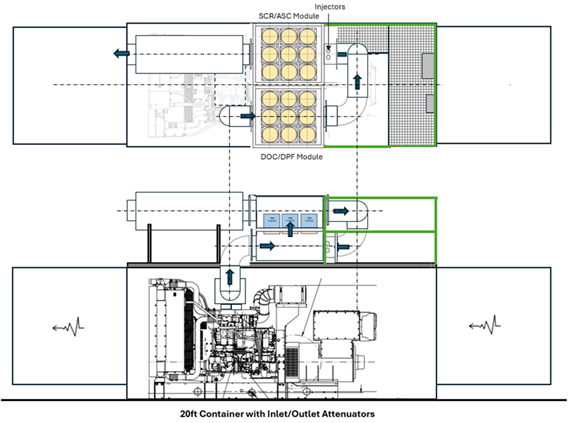
Common in datacenters, hospitals, and commercial standby systems where both emissions and noise limits are strict.
Key Engine Parameters
- 900 kW (PRP) / 1000 kW (ESP)
- 211 m³/min exhaust flow
- 477°C exhaust temperature
- 68 mbar max backpressure
- 20 L/h AdBlue consumption
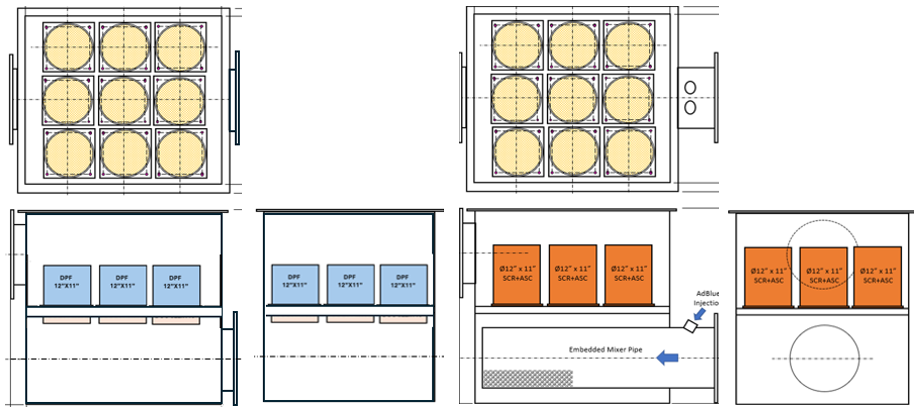
Airless SCR Design
- Diesel‑optimized catalyst
- Airless dosing for low maintenance
- Fast response to load changes
- Compact footprint for containerized gensets
Noise Control
- Integrated silencer for low‑frequency attenuation
- Optional cladding for mechanical rooms
Tier 4 Final Standards for QST30‑G5 NRZ
| Emission | 2015 Standard |
|---|---|
| CO | 3.5 g/kWh |
| NMHC | 0.19 g/kWh |
| NOx | 0.67 g/kWh |
| PM | 0.03 g/kWh |
3. Cummins QSB7‑G5 – Mid‑Range Diesel for Light Industrial Applications
Application Context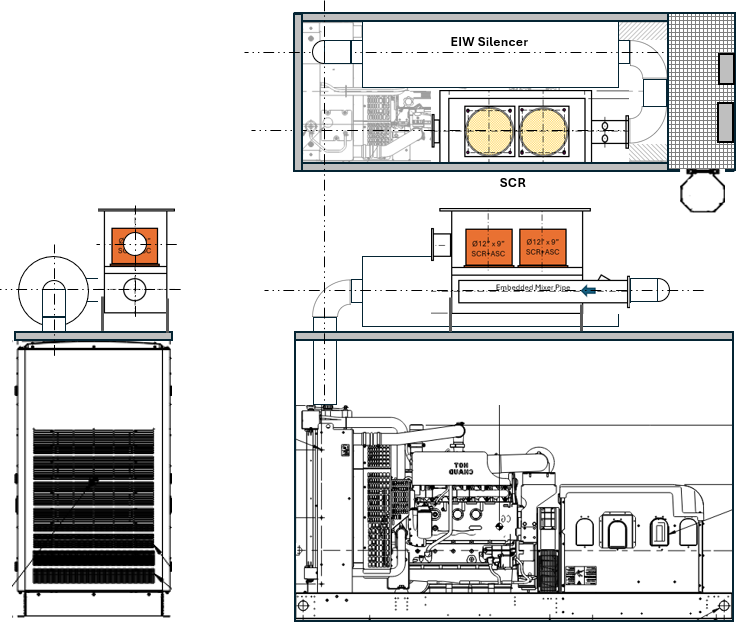
Used in smaller industrial standby systems and commercial buildings requiring compact emissions solutions.
Key Engine Parameters
- 175 kW
- 37.4 m³/min exhaust flow
- 480°C exhaust temperature
- 100 mbar max backpressure
- 2 L/h AdBlue consumption
Airless SCR Design
- Compact SCR housing
- Airless dosing for simplicity
- Catalyst sized for low exhaust mass flow
Noise Control
- Integrated silencing
- Optional cladding for breakout noise
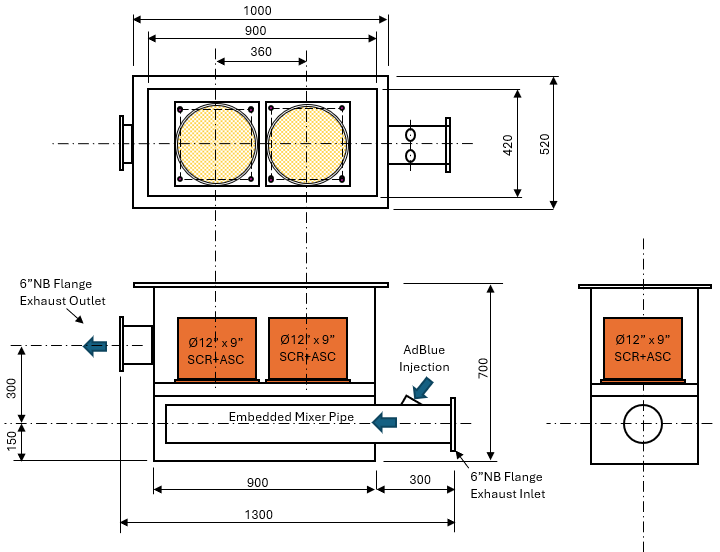
Tier 4 Final Standards for QSB7‑G5
| Emission | 2015 Standard |
|---|---|
| CO | 3.5 g/kWh |
| NMHC | 0.19 g/kWh |
| NOx | 0.67 g/kWh |
| PM | 0.03 g/kWh |
4. Cummins QSK60 – High‑Power Diesel for Industrial and Remote Power
Application Context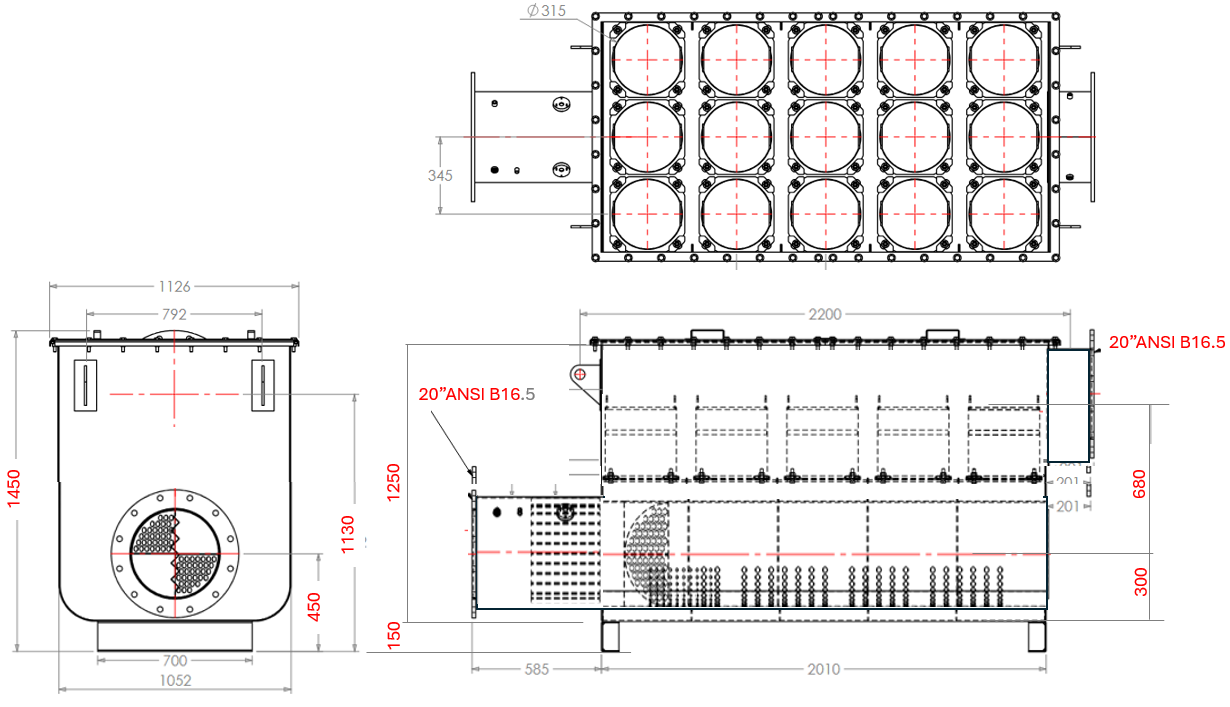
Used in mining, industrial standby, and remote installations requiring high reliability.
Key Engine Parameters
- 2180 kW
- 435.6 m³/min exhaust flow
- 485°C exhaust temperature
- 68 mbar max backpressure
- 30 L/h AdBlue consumption
- Raw NOₓ: 5.3 g/bhp → 0.5 g/bhp (‑91% reduction)
Airless SCR Design
- Large‑format SCR housing
- Modular catalyst blocks
- Airless dosing for reliability
Noise Control
- 65 dBA @ 1m integrated silencing
- Optional cladding for low‑frequency control
Tier 4 Final Standards for QSK60
| Emission | 2015 Standard |
|---|---|
| CO | 3.5 g/kWh |
| NMHC | 0.19 g/kWh |
| NOx | 0.67 g/kWh |
| PM | 0.03 g/kWh |
5. Cummins QSK78 – High‑Output Diesel for Heavy Industrial Applications
Application Context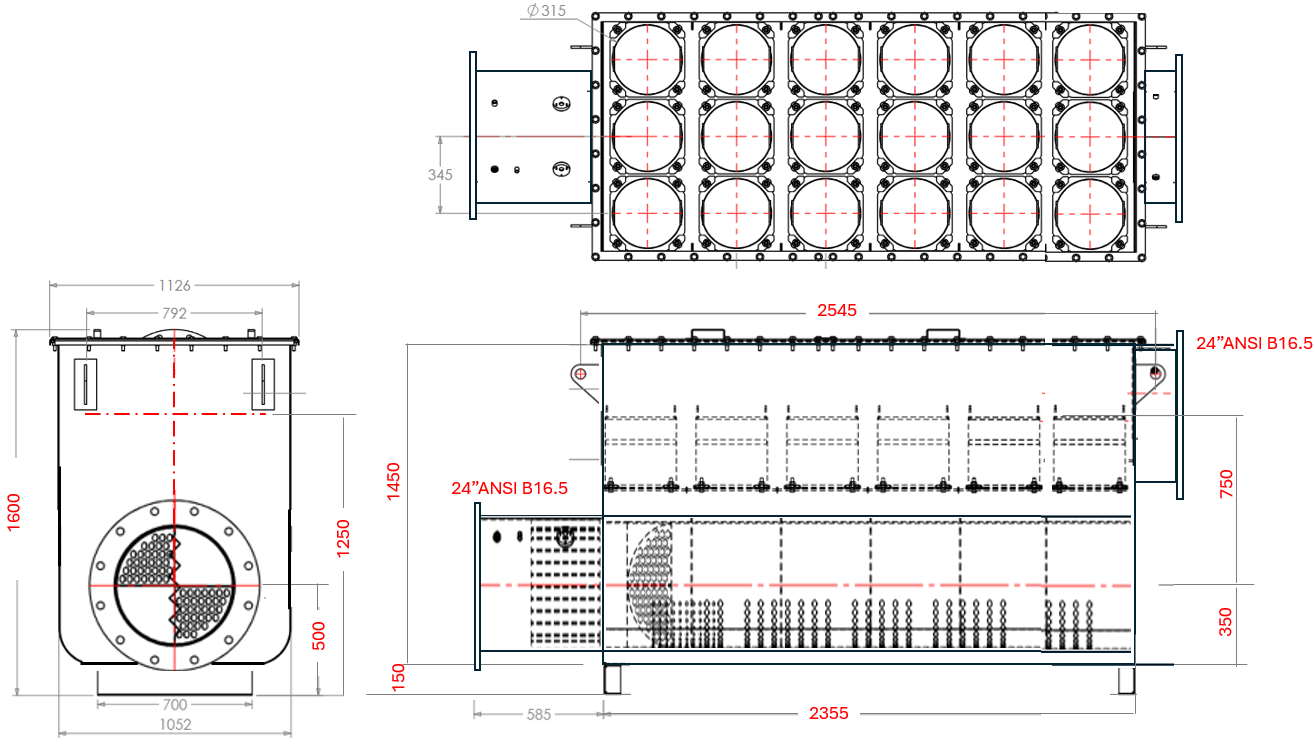
Used in large industrial standby systems and heavy‑duty power generation.
Key Engine Parameters
- 3029 kW
- 570.1 m³/min exhaust flow
- 471°C exhaust temperature
- 68 mbar max backpressure
- 56 L/h AdBlue consumption
- Raw NOₓ: 7.0 g/bhp → 0.5 g/bhp (‑93% reduction)
Airless SCR Design
- High‑capacity SCR housing
- Modular catalyst blocks
- Airless dosing for simplified installation
Noise Control
- Integrated silencing
- Optional cladding for breakout noise
Tier 4 Final Standards for QSK78
| Emission | 2015 Standard |
|---|---|
| CO | 3.5 g/kWh |
| NMHC | 0.19 g/kWh |
| NOx | 0.67 g/kWh |
| PM | 0.03 g/kWh |
6. Cummins QSK95 – Multi‑Megawatt Diesel for Mission‑Critical Power
Application Context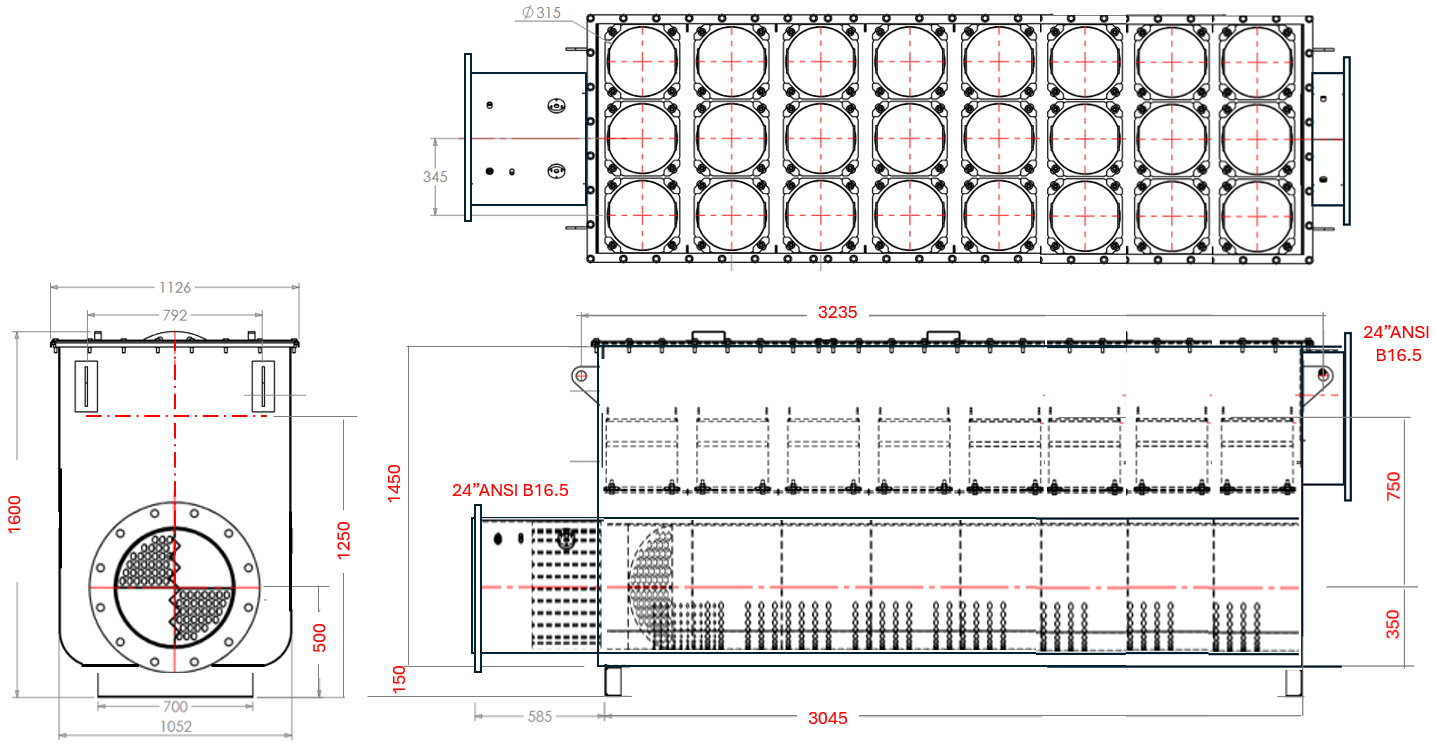
A leading choice for hyperscale datacenters, large hospitals, and industrial standby systems requiring Tier 4 Final certification.
Key Engine Parameters
- 3767 kW
- 726.8 m³/min exhaust flow
- 490°C exhaust temperature
- 70 mbar max backpressure
- 60 L/h AdBlue consumption
- Raw NOₓ: 6.13 g/bhp → 0.5 g/bhp (‑92% reduction)
Airless SCR Design
- Large‑format SCR with modular catalyst blocks
- Designed for rapid transient response
- Airless dosing reduces system complexity
Noise Control
- 65 dBA @ 1m integrated silencing
- Optional cladding for breakout noise
Tier 4 Final Standards for QSK95
| Emission | 2015 Standard |
|---|---|
| CO | 3.5 g/kWh |
| NMHC | 0.19 g/kWh |
| NOx | 0.67 g/kWh |
| PM | 0.03 g/kWh |
7. Cummins QSK50‑G25 – Diesel Engine for Tier 4 Final + PM Reduction
Application Context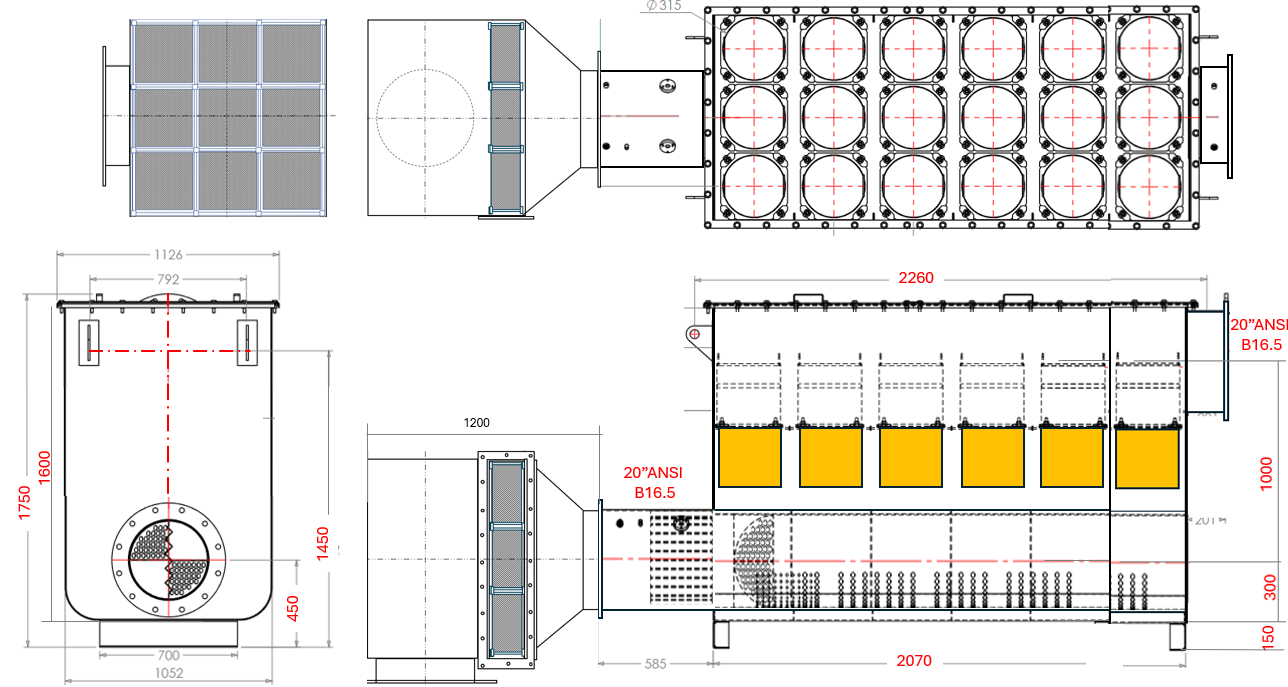
Used in industrial standby and regulated export markets requiring both NOₓ and PM reduction.
Key Engine Parameters
- 2000 kW
- 435.7 m³/min exhaust flow
- 529°C exhaust temperature
- 67 mbar max backpressure (53 mbar used by DOC/DPF/SCR‑ASC)
- 25 L/h DEF consumption
- Raw NOₓ: 6.7 g/bhp → 0.5 g/bhp (‑92.5% reduction)
- Raw PM: 0.05 g/bhp → 0.022 g/bhp (‑56% reduction)
Airless SCR Design
- Full aftertreatment chain: DOC + DPF + SCR + ASC
- Airless dosing for stable NOₓ control
- Modular catalyst blocks
Noise Control
- Integrated silencing
- Optional cladding for low‑frequency attenuation
Tier 4 Final Standards for QSK50‑G25
| Emission | 2015 Standard |
|---|---|
| CO | 3.5 g/kWh |
| NMHC | 0.19 g/kWh |
| NOx | 0.67 g/kWh |
| PM | 0.03 g/kWh |
Final Thoughts
Airless SCR technology provides a reliable, low‑maintenance path to Tier 4 Final compliance across Caterpillar’s most widely used engines. By integrating emissions reduction and acoustic attenuation into compact, modular systems, these solutions support datacenters, industrial facilities, and remote power installations where regulatory compliance and operational reliability are essential.
EI Williams Industries is actively expanding its library of ready‑engineered designs to include additional popular Caterpillar engine platforms. This ongoing development ensures that engineers, consultants, and project teams have access to validated, application‑specific SCR and silencing solutions as new engines enter the market or regulatory requirements evolve.